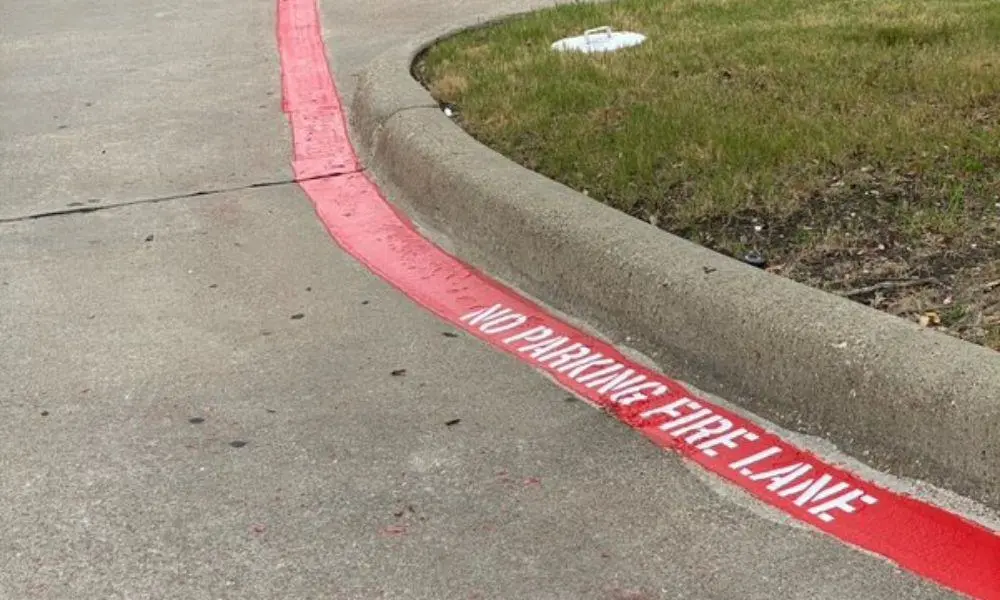
Where Fire Lanes Fade First
Red curb paint fades fastest near front entrances, hotel drop-off areas, apartment drives, restaurant service doors, and retail storefronts where tires pull close and sprinklers or rain hit the curb face. Salt air and UV exposure can make red markings look dull before the rest of the lot needs repainting.
Visibility depends on more than color. Lettering, no-parking stencils, curb condition, contrast, lighting, landscaping, and parked-car patterns all affect whether drivers understand the restriction.
What We Check
- Red curb visibility from moving vehicles
- No-parking stencil placement and spacing
- Overspray risk near sidewalks, storefronts, and landscaping
- Coordination with ADA spaces and pedestrian routes
- Vehicle notices, cones, and phased closure needs